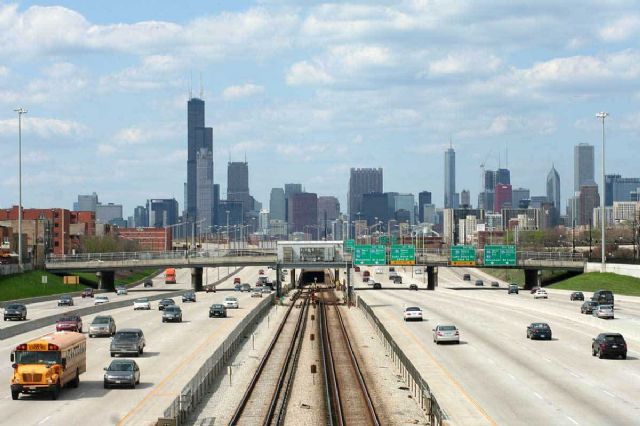
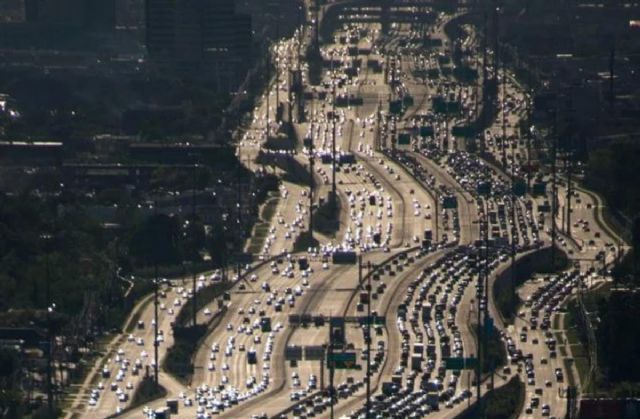
When I showed my employee your pic, we both giggled. That unpaved area to the
left of the picture has now become an express-way that changes direction with
the time of day.
When I showed my employee your pic, we both giggled. That unpaved area to the
left of the picture has now become an express-way that changes direction with
the time of day.
When I showed my employee your pic, we both giggled. That unpaved area to the
left of the picture has now become an express-way that changes direction with
the time of day.
When I showed my employee your pic, we both giggled. That unpaved area to the
left of the picture has now become an express-way that changes direction with
the time of day.
When I showed my employee your pic, we both giggled. That unpaved area to the
left of the picture has now become an express-way that changes direction with
the time of day.
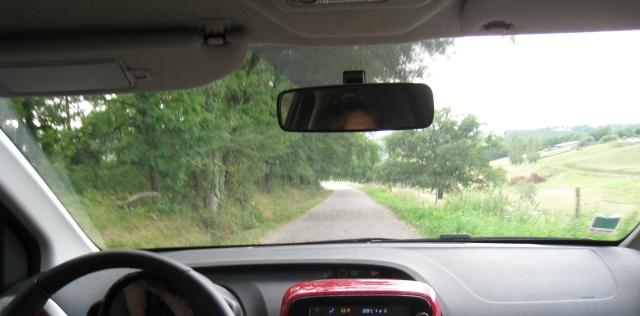
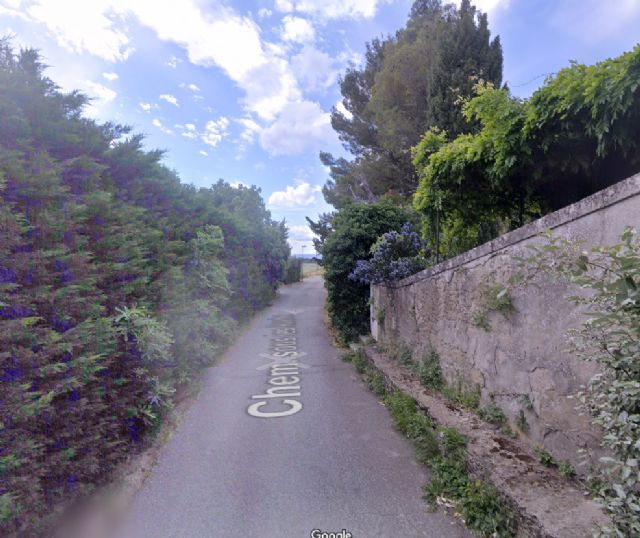
Meanwhile, in France:
(And don’t phone and drive.)
Ah? Here it's much different.
We've got a nicer sky
When I showed my employee your pic, we both giggled. That unpaved area to the
left of the picture has now become an express-way that changes direction with
the time of day.
Meanwhile, in France:
(And don’t phone and drive.)
Ah? Here it's much different.
We've got a nicer sky
I definitely enjoyed the human scale of things during my brief time in France
(as shown in my avatar) - many U.S. roads seem more for nephilim or Brobdingnagians
than regular people. I also thought it was interesting that routiers (rover scouts)
were directing traffic - you wouldn't see that in the USA.
[…]
I definitely enjoyed the human scale of things during my brief time in France
(as shown in my avatar) - many U.S. roads seem more for nephilim or Brobdingnagians
than regular people. I also thought it was interesting that routiers (rover scouts)
were directing traffic - you wouldn't see that in the USA.
In some US (and CA) towns, you need a car to cross a ‘street’ (more like ‘square’
or ‘plaza’)
On the other hand, small European streets are often a pain for cars (no parking
place, easily clogged…).
[…]
I definitely enjoyed the human scale of things during my brief time in France
(as shown in my avatar) - many U.S. roads seem more for nephilim or Brobdingnagians
than regular people. I also thought it was interesting that routiers (rover scouts)
were directing traffic - you wouldn't see that in the USA.
In some US (and CA) towns, you need a car to cross a ‘street’ (more like ‘square’
or ‘plaza’)
On the other hand, small European streets are often a pain for cars (no parking
place, easily clogged…).
Aaa… the difference it can make when your country is built around a invention
Aaa… the difference it can make when your country is built around a invention
To be fair, before World War II, trains were the dominant form of overland travel
in America and cities tended to be small and dense, kind of like European cities.
However, this country has grown a lot since then and new development tends to
be more centered around automobiles. Much the same is true of Canada.
Aaa… the difference it can make when your country is built around a invention
To be fair, before World War II, trains were the dominant form of overland travel
in America and cities tended to be small and dense, kind of like European cities.
However, this country has grown a lot since then and new development tends to
be more centered around automobiles. Much the same is true of Canada.
Not really, if you may notice Canada doesn’t have a lot of big highways like
the states, and most of our roads are just two lane.
Not really, if you may notice Canada doesn’t have a lot of big highways like
the states, and most of our roads are just two lane.
The same is true of the less developed parts of the United States. Big Canadian
cities tend to resemble big American cities, with a small urban core surrounded
by a large ring of low-density car-dependent suburbs.
Not really, if you may notice Canada doesn’t have a lot of big highways like
the states, and most of our roads are just two lane.
The same is true of the less developed parts of the United States. Big Canadian
cities tend to resemble big American cities, with a small urban core surrounded
by a large ring of low-density car-dependent suburbs.
That’s just it most of Canada’s towns are small, leading to not many big roads.
When I showed my employee your pic, we both giggled. That unpaved area to the
left of the picture has now become an express-way that changes direction with
the time of day.
When I showed my employee your pic, we both giggled. That unpaved area to the
left of the picture has now become an express-way that changes direction with
the time of day.
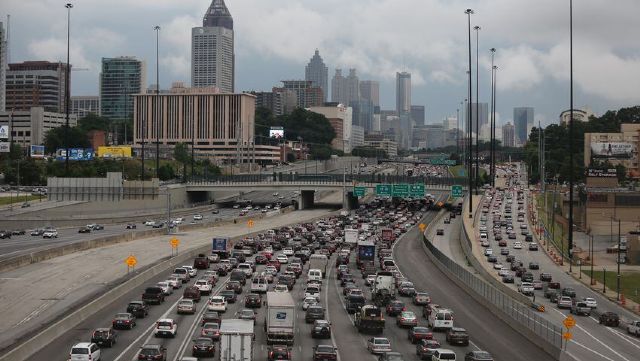
Ah, good ol' Atlanta. I hate driving through there.
There’s a section of the Interstate in Orange County, CA, where the 605 transitions
into the 405 as it merges with the 22 (Garden Grove Frwy). There used to be 18
lanes of traffic on that stretch of Hwy, 9 each way. Add to that, are two
major N/S bound Blvd's that intersect that same stretch, each with
8 lanes of traffic. So many are trying to get on, or get off within those couple
of miles
I still remember the challenge it was at times getting all the way over, especially
with the heavy truck traffic from the Port of Long Beach, using it too. If you
have gander with Google, it still may be the same chaotic case. It was always
impressive, that stretch of Hwy. Not just it's expanse, but the "Road
Warrior" feel of it too
There’s a section of the Interstate in Orange County, CA, where the 605 transitions
into the 405 as it merges with the 22 (Garden Grove Frwy). There used to be 18
lanes of traffic on that stretch of Hwy, 9 each way. Add to that, are two
major N/S bound Blvd's that intersect that same stretch, each with
8 lanes of traffic. So many are trying to get on, or get off within those couple
of miles
I still remember the challenge it was at times getting all the way over, especially
with the heavy truck traffic from the Port of Long Beach, using it too. If you
have gander with Google, it still may be the same chaotic case. It was always
impressive, that stretch of Hwy. Not just it's expanse, but the "Road
Warrior" feel of it too
And always working on some part of it. Past that mess a few weeks ago
There’s a section of the Interstate in Orange County, CA, where the 605 transitions
into the 405 as it merges with the 22 (Garden Grove Frwy). There used to be 18
lanes of traffic on that stretch of Hwy, 9 each way. Add to that, are two
major N/S bound Blvd's that intersect that same stretch, each with
8 lanes of traffic. So many are trying to get on, or get off within those couple
of miles
I still remember the challenge it was at times getting all the way over, especially
with the heavy truck traffic from the Port of Long Beach, using it too. If you
have gander with Google, it still may be the same chaotic case. It was always
impressive, that stretch of Hwy. Not just it's expanse, but the "Road
Warrior" feel of it too
And always working on some part of it. Past that mess a few weeks ago
Yeah, that's the real rub when trying to get around nowadays, the perpetual
road work that never seems to get much of anything done. Unfortunately, we've
got our share of those up here in Seattle too, Kevin. The never-ending projects
that take inexplicable years rather than the expected weeks or even months. Years
of tying up the daily commute of thousands.
Yeah, that's the real rub when trying to get around nowadays, the perpetual
road work that never seems to get much of anything done. Unfortunately, we've
got our share of those up here in Seattle too, Kevin. The never-ending projects
that take inexplicable years rather than the expected weeks or even months. Years
of tying up the daily commute of thousands.
Construction on I-405 in Washington started in 1956 as part of the federal Interstate
Highway system. A 30 mile stretch of highway services commuters on the east
side of Lake Washington.
The first section opened in 1961 with all sections opened by 1971. It constantly
been under construction/rework since it opened.
Based on the pace of work and the list of planned and funded projects, everything
should be completed in 2120.
(I grew up 1/4 mile from I-405 in Lynnwood. Played on it before the Woodinville
to Lynnwood section opened.)
Yeah, that's the real rub when trying to get around nowadays, the perpetual
road work that never seems to get much of anything done. Unfortunately, we've
got our share of those up here in Seattle too, Kevin. The never-ending projects
that take inexplicable years rather than the expected weeks or even months. Years
of tying up the daily commute of thousands.
Construction on I-405 in Washington started in 1956 as part of the federal Interstate
Highway system. A 30 mile stretch of highway services commuters on the east
side of Lake Washington.
The first section opened in 1961 with all sections opened by 1971. It constantly
been under construction/rework since it opened.
Based on the pace of work and the list of planned and funded projects, everything
should be completed in 2120.
Right about when roads are no longer used, and anti-gravity crafts are the thing
(I grew up 1/4 mile from I-405 in Lynnwood. Played on it before the Woodinville
to Lynnwood section opened.)
Very cool story. As a transplant to the Seattle area, I'm trying to imagine
how it was for you in a more rural Lynnwood
Yeah, that's the real rub when trying to get around nowadays, the perpetual
road work that never seems to get much of anything done. Unfortunately, we've
got our share of those up here in Seattle too, Kevin. The never-ending projects
that take inexplicable years rather than the expected weeks or even months. Years
of tying up the daily commute of thousands.
Construction on I-405 in Washington started in 1956 as part of the federal Interstate
Highway system. A 30 mile stretch of highway services commuters on the east
side of Lake Washington.
The first section opened in 1961 with all sections opened by 1971. It constantly
been under construction/rework since it opened.
Based on the pace of work and the list of planned and funded projects, everything
should be completed in 2120.
Right about when roads are no longer used, and anti-gravity crafts are the thing
(I grew up 1/4 mile from I-405 in Lynnwood. Played on it before the Woodinville
to Lynnwood section opened.)
Very cool story. As a transplant to the Seattle area, I'm trying to imagine
how it was for you in a more rural Lynnwood
Coon skin caps, horses, flintlocks, and farms. We were at peace with the natives.
Yeah, that's the real rub when trying to get around nowadays, the perpetual
road work that never seems to get much of anything done. Unfortunately, we've
got our share of those up here in Seattle too, Kevin. The never-ending projects
that take inexplicable years rather than the expected weeks or even months. Years
of tying up the daily commute of thousands.
Construction on I-405 in Washington started in 1956 as part of the federal Interstate
Highway system. A 30 mile stretch of highway services commuters on the east
side of Lake Washington.
The first section opened in 1961 with all sections opened by 1971. It constantly
been under construction/rework since it opened.
Based on the pace of work and the list of planned and funded projects, everything
should be completed in 2120.
Right about when roads are no longer used, and anti-gravity crafts are the thing
(I grew up 1/4 mile from I-405 in Lynnwood. Played on it before the Woodinville
to Lynnwood section opened.)
Very cool story. As a transplant to the Seattle area, I'm trying to imagine
how it was for you in a more rural Lynnwood
Coon skin caps, horses, flintlocks, and farms. We were at peace with the natives
Hey now! I had a coonskin hat as a kid. My dad got it for me at Disneyland. One
of those great memories, our time at Disneyland just he and I. At the start of
the day, he asked me to think about what one souvenir I'd like, and at the
end of day he'd buy it for me. I already knew and was bursting all day to
tell him...
By the way, I really did appreciate your pm to me last night, describing you
and your family in Lynnwood back then. Really enjoy hearing how things were,
especially in a place we now call home. To learn from someone firsthand is the
by far the best way! So thanks again for sharing
Once I drove an American from the airport straight to a golf club which involved
going down some country roads. At one point he was 100% insistent that I was
going the wrong way down a one-way road because he couldn't believe cars
were coming towards us.
It wasn't even a narrow road just regular country road.
It was a very funny and memorable journey made even more memorable by him giving
me the biggest tip I was ever given. I think he was either impressed or just
glad he made it in one piece!
Once I drove an American from the airport straight to a golf club which involved
going down some country roads. At one point he was 100% insistent that I was
going the wrong way down a one-way road because he couldn't believe cars
were coming towards us.
It wasn't even a narrow road just regular country road.
I assume this was in the UK? He may simply have been confused by people driving
on the left side of the road. We also have country roads here in America, but
people typically drive on the right when not drunk or passing other vehicles.
It was a very funny and memorable journey made even more memorable by him giving
me the biggest tip I was ever given. I think he was either impressed or just
glad he made it in one piece!
Most likely he was simply very wealthy if he was flying to Europe to play golf.
The biggest highway I've ever driven on is the Dan Ryan Expressway on the
south side of Chicago. It has fourteen lanes, seven in each direction.
According to Wikipedia, it is the busiest road in Illinois. In 2005, an average
of more than 300,000 vehicles traversed a portion of the freeway every day.
The south side of Chicago is prone to gun violence and the Dan Ryan is no exception.
Criminals armed with automatic assault rifles occasionally open fire on the expressway,
killing people in cars.


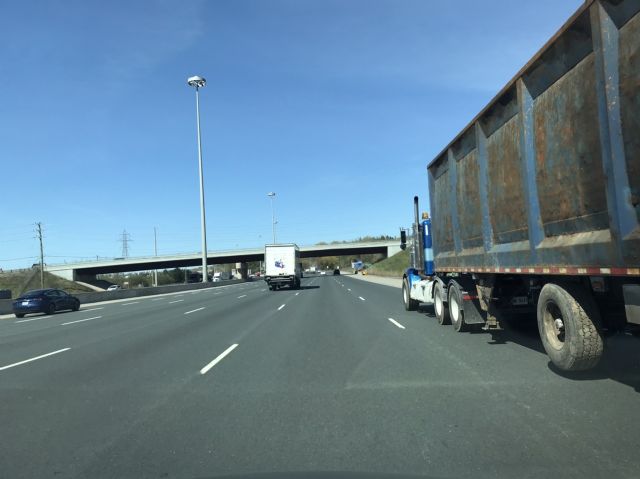
 Canada, Ontario


 USA, Virginia
 Italy, Marche


 France, Provence-Alpes-Côte d'Azur











 United Kingdom, England