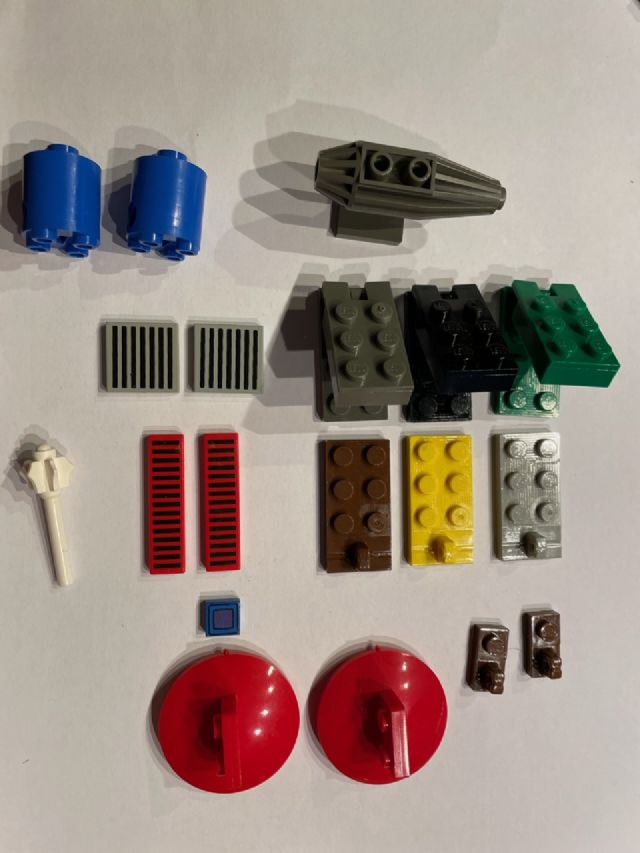
The top of the hinge has the lego logos on the studs, but the bottom half not
yet, I assume a very early prototype fase.
Great find!
The colors compare to LEGOland colors used in the 70s and 80s before they became
mainstream.
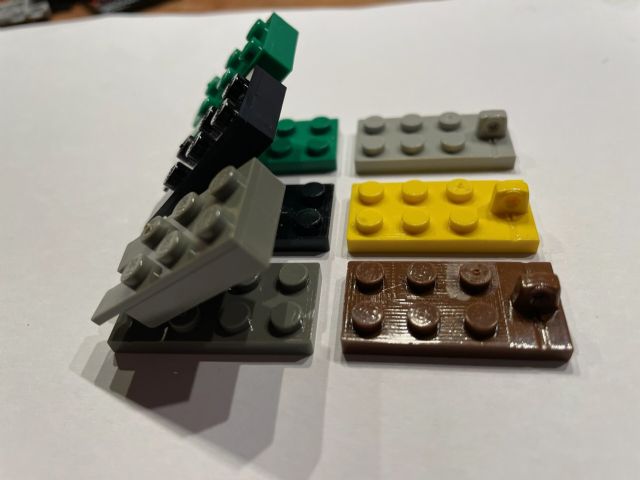
It looks like the molds were prototypes, with the rough surface.
The top of the hinge has the lego logos on the studs, but the bottom half not
yet, I assume a very early prototype fase.
Great find!
The colors compare to LEGOland colors used in the 70s and 80s before they became
mainstream.
It looks like the molds were prototypes, with the rough surface.
Any markings on them, mold number etc?
More pictures please!
Maxx
I would have guessed them to be younger, this type of hinge wasn't used in
the 80s yet - with a quick look in the catalogue I see them appearing from 1999
on. Earlier they used these connections for hinges:
*
4276b Hinge Plate 1 x 2 with 2 Fingers on End - Hollow Studs Parts: Hinge
[…]
I would have guessed them to be younger, this type of hinge wasn't used in
the 80s yet - with a quick look in the catalogue I see them appearing from 1999
on. Earlier they used these connections for hinges:
*
4276b Hinge Plate 1 x 2 with 2 Fingers on End - Hollow Studs Parts: Hinge
The top of the hinge has the lego logos on the studs, but the bottom half not
yet, I assume a very early prototype fase.
Great find!
The colors compare to LEGOland colors used in the 70s and 80s before they became
mainstream.
It looks like the molds were prototypes, with the rough surface.
Any markings on them, mold number etc?
More pictures please!
Maxx
I would have guessed them to be younger, this type of hinge wasn't used in
the 80s yet - with a quick look in the catalogue I see them appearing from 1999
on. Earlier they used these connections for hinges:
*
4276b Hinge Plate 1 x 2 with 2 Fingers on End - Hollow Studs Parts: Hinge
I was more thinking of these being made instead of the older type hinges.
The top of the hinge has the lego logos on the studs, but the bottom half not
yet, I assume a very early prototype fase.
A few years ago I have acquired the collection of Daniel Krentz, designer from
1970/1996
In his collection were lots of gems like these, prototype parts, parts with only
TF or FF in it, and some parts even with partnumber that were never released!
So I know for sure it is genuine Lego, I always wonder how the designers in those
days would go into the factory and try out new things 🤗
The top of the hinge has the lego logos on the studs, but the bottom half not
yet, I assume a very early prototype fase.
A few years ago I have acquired the collection of Daniel Krentz, designer from
1970/1996
In his collection were lots of gems like these, prototype parts, parts with only
TF or FF in it, and some parts even with partnumber that were never released!
So I know for sure it is genuine Lego, I always wonder how the designers in those
days would go into the factory and try out new things 🤗
The top of the hinge has the lego logos on the studs, but the bottom half not
yet, I assume a very early prototype fase.
A few years ago I have acquired the collection of Daniel Krentz, designer from
1970/1996
In his collection were lots of gems like these, prototype parts, parts with only
TF or FF in it, and some parts even with partnumber that were never released!
So I know for sure it is genuine Lego, I always wonder how the designers in those
days would go into the factory and try out new things 🤗
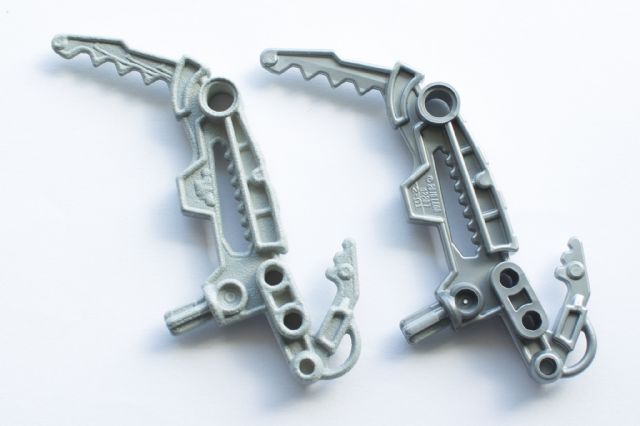
Why does the one on the left have its lego logo erased?
In Catalog Identification, WoutR writes:
In Catalog Identification, Pazzo writes:
In Catalog Identification, Pazzo writes:
Anyone seen those before?
The top of the hinge has the lego logos on the studs, but the bottom half not
yet, I assume a very early prototype fase.
A few years ago I have acquired the collection of Daniel Krentz, designer from
1970/1996
In his collection were lots of gems like these, prototype parts, parts with only
TF or FF in it, and some parts even with partnumber that were never released!
So I know for sure it is genuine Lego, I always wonder how the designers in those
days would go into the factory and try out new things 🤗
Why does the one on the left have its lego logo erased?
If only it was Pat. Pend....
The one on the left is a 3d printed prototype, indicating where the logo/text
and the injection point will be placed on the real part. I think that they could
not print text that small back then.
Why does the one on the left have its lego logo erased?
If only it was Pat. Pend....
The one on the left is a 3d printed prototype, indicating where the logo/text
and the injection point will be placed on the real part. I think that they could
not print text that small back then.
The top of the hinge has the lego logos on the studs, but the bottom half not
yet, I assume a very early prototype fase.
A few years ago I have acquired the collection of Daniel Krentz, designer from
1970/1996
In his collection were lots of gems like these, prototype parts, parts with only
TF or FF in it, and some parts even with partnumber that were never released!
So I know for sure it is genuine Lego, I always wonder how the designers in those
days would go into the factory and try out new things 🤗
I think they look 3d printed and painted.
I agree they look weird, but if they are 3D printed, why have a molding pip and
why the rough prototype surface?
Looks more like a prototype mold quickly made to work for prototype part making.
The top of the hinge has the lego logos on the studs, but the bottom half not
yet, I assume a very early prototype fase.
A few years ago I have acquired the collection of Daniel Krentz, designer from
1970/1996
In his collection were lots of gems like these, prototype parts, parts with only
TF or FF in it, and some parts even with partnumber that were never released!
So I know for sure it is genuine Lego, I always wonder how the designers in those
days would go into the factory and try out new things 🤗
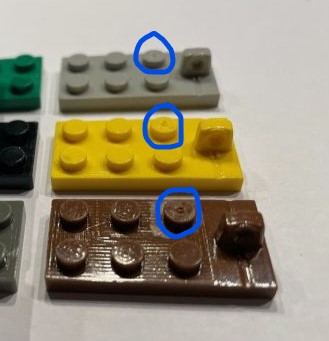
If you already knew this, why start a forumpost with ‘possible prototypes????’.
And, although I believe they can well be prototypes, if a 3D printer prints a
part from a real example with a injection mark, wouldn’t it print the injection
mark too?
The top of the hinge has the lego logos on the studs, but the bottom half not
yet, I assume a very early prototype fase.
A few years ago I have acquired the collection of Daniel Krentz, designer from
1970/1996
In his collection were lots of gems like these, prototype parts, parts with only
TF or FF in it, and some parts even with partnumber that were never released!
So I know for sure it is genuine Lego, I always wonder how the designers in those
days would go into the factory and try out new things 🤗
If you already knew this, why start a forumpost with ‘possible prototypes????’.
And, although I believe they can well be prototypes, if a 3D printer prints a
part from a real example with a injection mark, wouldn’t it print the injection
mark too?


 Netherlands, Zuid-Holland


 Canada, Ontario
 USA
USA


 United Kingdom, England

 France, Nouvelle-Aquitaine



 Austria, Steiermark