So with the end of de minimis (which allowed for country of origin reporting
from the place where it was delivered from - a de minimis specific feature) what
should be the country of origin for lego? Technically this is the place of manufacture/last
major transformation, but with multiple pieces coming from different countries
this would be basically impossible to determine. For example, if a set is put
together at the USA factory, it must meet content rules under the USMCA/CUSMA
agreement to get preferential treatment (basically if most of the pieces are
manufactured in China it will not be of North American origin).
If one searches for prior rulings under the CROSS system (rulings.cbp.gov) the
HS code for lego sets was found to be 9503.00.0080 while a MF was found to be
9503.00.0073, etc. Given this it will be vitally now important to list the HS
code correctly for all items in every shipment (MFs, capes/cloth pieces, etc.)
and to know where this stuff came from, as not doing it correctly can result
in retroactive charges to the importer of record. However, given that postal
services will need to collect duty, i wonder if they will hold the exporter ultimately
accountable for misclassifications or other?
Plus sellers will most likely now need to calculate and quote out duties/tariff
charges to US customers, as the post office may charge that to sellers as they
are required to post the bond for the duties or perhaps the postal services will
lay the charge on the buyer/importer prior to delivery. Either way, sellers will
need to understand all of this to at least avoid angry customers.
There is a CROSS ruling for country of origin marking, thus why you see the made
in multiple countries on box, but how would this work for say a used set or new
set, let alone different pieces as different line items.
Most likely Canada Post will say to list Canada as country of origin, but this
is not correct. Maybe much to do about nothing, but I do see potential issues.
So with the end of de minimis (which allowed for country of origin reporting
from the place where it was delivered from - a de minimis specific feature) what
should be the country of origin for lego? Technically this is the place of manufacture/last
major transformation, but with multiple pieces coming from different countries
this would be basically impossible to determine. For example, if a set is put
together at the USA factory, it must meet content rules under the USMCA/CUSMA
agreement to get preferential treatment (basically if most of the pieces are
manufactured in China it will not be of North American origin).
If one searches for prior rulings under the CROSS system (rulings.cbp.gov) the
HS code for lego sets was found to be 9503.00.0080 while a MF was found to be
9503.00.0073, etc. Given this it will be vitally now important to list the HS
code correctly for all items in every shipment (MFs, capes/cloth pieces, etc.)
and to know where this stuff came from, as not doing it correctly can result
in retroactive charges to the importer of record. However, given that postal
services will need to collect duty, i wonder if they will hold the exporter ultimately
accountable for misclassifications or other?
Plus sellers will most likely now need to calculate and quote out duties/tariff
charges to US customers, as the post office may charge that to sellers as they
are required to post the bond for the duties or perhaps the postal services will
lay the charge on the buyer/importer prior to delivery. Either way, sellers will
need to understand all of this to at least avoid angry customers.
There is a CROSS ruling for country of origin marking, thus why you see the made
in multiple countries on box, but how would this work for say a used set or new
set, let alone different pieces as different line items.
Most likely Canada Post will say to list Canada as country of origin, but this
is not correct. Maybe much to do about nothing, but I do see potential issues.
Thoughts?
simply stop shipping to the US until they sort it out and give actual on how
to do it. Buyers have always been responsible for any custom duties or tariffs
not the sellers.
Definitely have suspended sales to the USA, as there is not much clear guidance
on this. Multiple lego pieces from different origins are a fairly unique case
for tariff treatments, primarily because we do not know where it was manufactured
as no country of origin markings.
Although with postal services needing to post the bond (insurance) for tariff
collection it is not clear who they will require to collect? This is a fairly
new and unique scenario.
Be assured, the end of de minimis is fundamentally changing how non-USA Bricklink
sellers ship to the U.S.
In Taxes, RebelliousBrick writes:
In Taxes, BlueHouseBricks writes:
So with the end of de minimis (which allowed for country of origin reporting
from the place where it was delivered from - a de minimis specific feature) what
should be the country of origin for lego? Technically this is the place of manufacture/last
major transformation, but with multiple pieces coming from different countries
this would be basically impossible to determine. For example, if a set is put
together at the USA factory, it must meet content rules under the USMCA/CUSMA
agreement to get preferential treatment (basically if most of the pieces are
manufactured in China it will not be of North American origin).
If one searches for prior rulings under the CROSS system (rulings.cbp.gov) the
HS code for lego sets was found to be 9503.00.0080 while a MF was found to be
9503.00.0073, etc. Given this it will be vitally now important to list the HS
code correctly for all items in every shipment (MFs, capes/cloth pieces, etc.)
and to know where this stuff came from, as not doing it correctly can result
in retroactive charges to the importer of record. However, given that postal
services will need to collect duty, i wonder if they will hold the exporter ultimately
accountable for misclassifications or other?
Plus sellers will most likely now need to calculate and quote out duties/tariff
charges to US customers, as the post office may charge that to sellers as they
are required to post the bond for the duties or perhaps the postal services will
lay the charge on the buyer/importer prior to delivery. Either way, sellers will
need to understand all of this to at least avoid angry customers.
There is a CROSS ruling for country of origin marking, thus why you see the made
in multiple countries on box, but how would this work for say a used set or new
set, let alone different pieces as different line items.
Most likely Canada Post will say to list Canada as country of origin, but this
is not correct. Maybe much to do about nothing, but I do see potential issues.
Thoughts?
simply stop shipping to the US until they sort it out and give actual on how
to do it. Buyers have always been responsible for any custom duties or tariffs
not the sellers.
Well, Canada Post now requiring pre-payment of duties, but without knowing the
country of origin that is a problem. It will be important before opening sales
to the U.S. to determine if the duty payer is ultimately the importer. Fines
and retroactive penalties in the U.S. are enormous and limitless, which most
don't realize. Simply marking Denmark could be a major issue for country
of origin if future rulings by the U.S. CBP rule other countries as such (most
notably China).
In Taxes, BlueHouseBricks writes:
Definitely have suspended sales to the USA, as there is not much clear guidance
on this. Multiple lego pieces from different origins are a fairly unique case
for tariff treatments, primarily because we do not know where it was manufactured
as no country of origin markings.
Although with postal services needing to post the bond (insurance) for tariff
collection it is not clear who they will require to collect? This is a fairly
new and unique scenario.
Be assured, the end of de minimis is fundamentally changing how non-USA Bricklink
sellers ship to the U.S.
In Taxes, RebelliousBrick writes:
In Taxes, BlueHouseBricks writes:
So with the end of de minimis (which allowed for country of origin reporting
from the place where it was delivered from - a de minimis specific feature) what
should be the country of origin for lego? Technically this is the place of manufacture/last
major transformation, but with multiple pieces coming from different countries
this would be basically impossible to determine. For example, if a set is put
together at the USA factory, it must meet content rules under the USMCA/CUSMA
agreement to get preferential treatment (basically if most of the pieces are
manufactured in China it will not be of North American origin).
If one searches for prior rulings under the CROSS system (rulings.cbp.gov) the
HS code for lego sets was found to be 9503.00.0080 while a MF was found to be
9503.00.0073, etc. Given this it will be vitally now important to list the HS
code correctly for all items in every shipment (MFs, capes/cloth pieces, etc.)
and to know where this stuff came from, as not doing it correctly can result
in retroactive charges to the importer of record. However, given that postal
services will need to collect duty, i wonder if they will hold the exporter ultimately
accountable for misclassifications or other?
Plus sellers will most likely now need to calculate and quote out duties/tariff
charges to US customers, as the post office may charge that to sellers as they
are required to post the bond for the duties or perhaps the postal services will
lay the charge on the buyer/importer prior to delivery. Either way, sellers will
need to understand all of this to at least avoid angry customers.
There is a CROSS ruling for country of origin marking, thus why you see the made
in multiple countries on box, but how would this work for say a used set or new
set, let alone different pieces as different line items.
Most likely Canada Post will say to list Canada as country of origin, but this
is not correct. Maybe much to do about nothing, but I do see potential issues.
Thoughts?
simply stop shipping to the US until they sort it out and give actual on how
to do it. Buyers have always been responsible for any custom duties or tariffs
not the sellers.
Well, Canada Post now requiring pre-payment of duties, but without knowing the
country of origin that is a problem. It will be important before opening sales
to the U.S. to determine if the duty payer is ultimately the importer. Fines
and retroactive penalties in the U.S. are enormous and limitless, which most
don't realize. Simply marking Denmark could be a major issue for country
of origin if future rulings by the U.S. CBP rule other countries as such (most
notably China).
it is true that the fines can be major, however I dont think there is any way
physically possible to pick up a random lego brick and state which country its
from. I've sent pictures and somewhat discussed it with my shipping company
and have had no problems with labelling individual lego bricks as made in denmark
I agree that given the small shipments and such most likely they will go through,
but time will only tell. The big issue is if the CBP ever rules on this in a
unfavourable way. I have read some others posts about Bricklink making a statement.
It would be very helpful if they could leverage Lego's customs expertise
at some point to assist sellers as everyone is basically selling the same items
on their platform (as opposed to ebay, etc.). However, i doubt they would ever
do that for liability purposes. In reality, the only people who can truly rule
on this is CBP directly.
PS - i enjoy your YT content, keep it up.
In Taxes, Nubs_Select writes:
In Taxes, BlueHouseBricks writes:
Well, Canada Post now requiring pre-payment of duties, but without knowing the
country of origin that is a problem. It will be important before opening sales
to the U.S. to determine if the duty payer is ultimately the importer. Fines
and retroactive penalties in the U.S. are enormous and limitless, which most
don't realize. Simply marking Denmark could be a major issue for country
of origin if future rulings by the U.S. CBP rule other countries as such (most
notably China).
it is true that the fines can be major, however I dont think there is any way
physically possible to pick up a random lego brick and state which country its
from. I've sent pictures and somewhat discussed it with my shipping company
and have had no problems with labelling individual lego bricks as made in denmark
I agree that given the small shipments and such most likely they will go through,
but time will only tell. The big issue is if the CBP ever rules on this in a
unfavourable way. I have read some others posts about Bricklink making a statement.
It would be very helpful if they could leverage Lego's customs expertise
at some point to assist sellers as everyone is basically selling the same items
on their platform (as opposed to ebay, etc.). However, i doubt they would ever
do that for liability purposes. In reality, the only people who can truly rule
on this is CBP directly.
Indeed, additional clarity would be amazing.
PS - i enjoy your YT content, keep it up.
Thanks! 🍕🍕🍕
In Taxes, Nubs_Select writes:
In Taxes, BlueHouseBricks writes:
Well, Canada Post now requiring pre-payment of duties, but without knowing the
country of origin that is a problem. It will be important before opening sales
to the U.S. to determine if the duty payer is ultimately the importer. Fines
and retroactive penalties in the U.S. are enormous and limitless, which most
don't realize. Simply marking Denmark could be a major issue for country
of origin if future rulings by the U.S. CBP rule other countries as such (most
notably China).
it is true that the fines can be major, however I dont think there is any way
physically possible to pick up a random lego brick and state which country its
from. I've sent pictures and somewhat discussed it with my shipping company
and have had no problems with labelling individual lego bricks as made in denmark
Well, Canada Post now requiring pre-payment of duties, but without knowing the
country of origin that is a problem. It will be important before opening sales
to the U.S. to determine if the duty payer is ultimately the importer. Fines
and retroactive penalties in the U.S. are enormous and limitless, which most
don't realize. Simply marking Denmark could be a major issue for country
of origin if future rulings by the U.S. CBP rule other countries as such (most
notably China).
it is true that the fines can be major, however I dont think there is any way
physically possible to pick up a random lego brick and state which country its
from.
We cannot I am not sure how who can!
I've sent pictures and somewhat discussed it with my shipping company
and have had no problems with labelling individual lego bricks as made in denmark
Are you going to disable shipping to USA? Not sure what changes are coming and
whether I can ship smoothly to USA with CanadaPost and if buyers will be hit
with any additional fees at their end?
Well, Canada Post now requiring pre-payment of duties, but without knowing the
country of origin that is a problem. It will be important before opening sales
to the U.S. to determine if the duty payer is ultimately the importer. Fines
and retroactive penalties in the U.S. are enormous and limitless, which most
don't realize. Simply marking Denmark could be a major issue for country
of origin if future rulings by the U.S. CBP rule other countries as such (most
notably China).
it is true that the fines can be major, however I dont think there is any way
physically possible to pick up a random lego brick and state which country its
from.
We cannot I am not sure how who can!
indeed!
I've sent pictures and somewhat discussed it with my shipping company
and have had no problems with labelling individual lego bricks as made in denmark
Not sure what changes are coming and
whether I can ship smoothly to USA with CanadaPost and if buyers will be hit
with any additional fees at their end?
normally DDU would mean they pay it on delivery (since with these changes, goods
from pretty much everywhere will be tariffed in addition to regular sales tax).
however it seems unlike other countries, they are almost "forcing" DDP
as the only option which means us as sellers will have to figure out the formula
and include it as a cost when the buyers place their orders
Well, Canada Post now requiring pre-payment of duties, but without knowing the
country of origin that is a problem. It will be important before opening sales
to the U.S. to determine if the duty payer is ultimately the importer. Fines
and retroactive penalties in the U.S. are enormous and limitless, which most
don't realize. Simply marking Denmark could be a major issue for country
of origin if future rulings by the U.S. CBP rule other countries as such (most
notably China).
it is true that the fines can be major, however I dont think there is any way
physically possible to pick up a random lego brick and state which country its
from.
We cannot I am not sure how who can!
indeed!
I've sent pictures and somewhat discussed it with my shipping company
and have had no problems with labelling individual lego bricks as made in denmark
Not sure what changes are coming and
whether I can ship smoothly to USA with CanadaPost and if buyers will be hit
with any additional fees at their end?
normally DDU would mean they pay it on delivery (since with these changes, goods
from pretty much everywhere will be tariffed in addition to regular sales tax).
however it seems unlike other countries, they are almost "forcing" DDP
as the only option which means us as sellers will have to figure out the formula
and include it as a cost when the buyers place their orders
As I have got to know them, there is 69% chance they cancel it the last second,
a 32% change they push the date to apply the changes, and 54% they implement
it with some modifications that the tariffs will be only applied to imports coming
from the South Pole.
Well, Canada Post now requiring pre-payment of duties, but without knowing the
country of origin that is a problem. It will be important before opening sales
to the U.S. to determine if the duty payer is ultimately the importer. Fines
and retroactive penalties in the U.S. are enormous and limitless, which most
don't realize. Simply marking Denmark could be a major issue for country
of origin if future rulings by the U.S. CBP rule other countries as such (most
notably China).
it is true that the fines can be major, however I dont think there is any way
physically possible to pick up a random lego brick and state which country its
from.
We cannot I am not sure how who can!
indeed!
I've sent pictures and somewhat discussed it with my shipping company
and have had no problems with labelling individual lego bricks as made in denmark
Not sure what changes are coming and
whether I can ship smoothly to USA with CanadaPost and if buyers will be hit
with any additional fees at their end?
normally DDU would mean they pay it on delivery (since with these changes, goods
from pretty much everywhere will be tariffed in addition to regular sales tax).
however it seems unlike other countries, they are almost "forcing" DDP
as the only option which means us as sellers will have to figure out the formula
and include it as a cost when the buyers place their orders
As I have got to know them, there is 69% chance they cancel it the last second,
a 32% change they push the date to apply the changes, and 54% they implement
it with some modifications that the tariffs will be only applied to imports coming
from the South Pole.
Well, Canada Post now requiring pre-payment of duties, but without knowing the
country of origin that is a problem. It will be important before opening sales
to the U.S. to determine if the duty payer is ultimately the importer. Fines
and retroactive penalties in the U.S. are enormous and limitless, which most
don't realize. Simply marking Denmark could be a major issue for country
of origin if future rulings by the U.S. CBP rule other countries as such (most
notably China).
In Taxes, BlueHouseBricks writes:
Definitely have suspended sales to the USA, as there is not much clear guidance
on this. Multiple lego pieces from different origins are a fairly unique case
for tariff treatments, primarily because we do not know where it was manufactured
as no country of origin markings.
Although with postal services needing to post the bond (insurance) for tariff
collection it is not clear who they will require to collect? This is a fairly
new and unique scenario.
Be assured, the end of de minimis is fundamentally changing how non-USA Bricklink
sellers ship to the U.S.
In Taxes, RebelliousBrick writes:
In Taxes, BlueHouseBricks writes:
So with the end of de minimis (which allowed for country of origin reporting
from the place where it was delivered from - a de minimis specific feature) what
should be the country of origin for lego? Technically this is the place of manufacture/last
major transformation, but with multiple pieces coming from different countries
this would be basically impossible to determine. For example, if a set is put
together at the USA factory, it must meet content rules under the USMCA/CUSMA
agreement to get preferential treatment (basically if most of the pieces are
manufactured in China it will not be of North American origin).
If one searches for prior rulings under the CROSS system (rulings.cbp.gov) the
HS code for lego sets was found to be 9503.00.0080 while a MF was found to be
9503.00.0073, etc. Given this it will be vitally now important to list the HS
code correctly for all items in every shipment (MFs, capes/cloth pieces, etc.)
and to know where this stuff came from, as not doing it correctly can result
in retroactive charges to the importer of record. However, given that postal
services will need to collect duty, i wonder if they will hold the exporter ultimately
accountable for misclassifications or other?
Plus sellers will most likely now need to calculate and quote out duties/tariff
charges to US customers, as the post office may charge that to sellers as they
are required to post the bond for the duties or perhaps the postal services will
lay the charge on the buyer/importer prior to delivery. Either way, sellers will
need to understand all of this to at least avoid angry customers.
There is a CROSS ruling for country of origin marking, thus why you see the made
in multiple countries on box, but how would this work for say a used set or new
set, let alone different pieces as different line items.
Most likely Canada Post will say to list Canada as country of origin, but this
is not correct. Maybe much to do about nothing, but I do see potential issues.
Thoughts?
simply stop shipping to the US until they sort it out and give actual on how
to do it. Buyers have always been responsible for any custom duties or tariffs
not the sellers.
The country of origin is clearly identified in the Lego product code. This 5-6
digit production code (with one letter code) is generally found above the SKU.
In most instances you will see an "R" which meaning Mexico.
This same code is often found on the seals. (also something I use to make sure
the box was not tampered with in a "new/sealed" transaction).
For example lets pick a random number 38R24. That means it was made in the 38th
week, R=Mexico 2024 and so on. Other letters that may be used are H.R.Q S and
so forth. Each letter gives the country of manufacture. There will only ever
be 1 letter.
Your country or ORIGIN will always be "Canada" you are the "shipper/seller".
Your place of MANUFACTURE will in this instance be Mexico (r).
I am not sure about your HS codes you have used or are using. But widely accepted
are 95030035 (plastic blocks) or 95030030 (technic sets that have remote controls
etc that are not stand alone plastic block building sets)
I have done over 500 New/Sealed set transactions in the USA during the last 12
months, of which 100 or so were through Bricklink. I have never had a package
returned to me.
In the customs forms it asks for a description I always use "New/Sealed Lego/Plastic
Blocks-Childs toy/Product of Mexico.(providing it has an "r" on it)
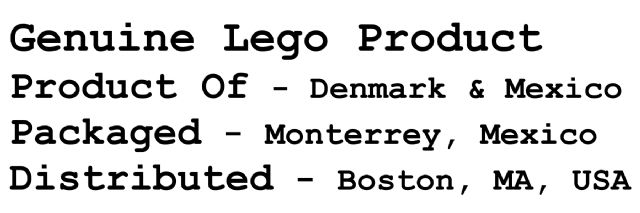
On the box in a plastic envelope I include the Bricklink Invoice. I also attach
a thermal sticker with secondary information as in the photo.
Personally if I have a set a USA buyer wants and its clear to me it was made
in China by the product code I advise the Buyer and I will cancel the transaction.
I know its a pain in the butt, but this is the system we will be required to
operate in and over time you will adapt.
Don't overthink it. Simple rules (1) you are in Canada (2) product is manufactured
by the code on the box (3) they are targeting china not you!
Well, Canada Post now requiring pre-payment of duties, but without knowing the
country of origin that is a problem. It will be important before opening sales
to the U.S. to determine if the duty payer is ultimately the importer. Fines
and retroactive penalties in the U.S. are enormous and limitless, which most
don't realize. Simply marking Denmark could be a major issue for country
of origin if future rulings by the U.S. CBP rule other countries as such (most
notably China).
In Taxes, BlueHouseBricks writes:
Definitely have suspended sales to the USA, as there is not much clear guidance
on this. Multiple lego pieces from different origins are a fairly unique case
for tariff treatments, primarily because we do not know where it was manufactured
as no country of origin markings.
Although with postal services needing to post the bond (insurance) for tariff
collection it is not clear who they will require to collect? This is a fairly
new and unique scenario.
Be assured, the end of de minimis is fundamentally changing how non-USA Bricklink
sellers ship to the U.S.
In Taxes, RebelliousBrick writes:
In Taxes, BlueHouseBricks writes:
So with the end of de minimis (which allowed for country of origin reporting
from the place where it was delivered from - a de minimis specific feature) what
should be the country of origin for lego? Technically this is the place of manufacture/last
major transformation, but with multiple pieces coming from different countries
this would be basically impossible to determine. For example, if a set is put
together at the USA factory, it must meet content rules under the USMCA/CUSMA
agreement to get preferential treatment (basically if most of the pieces are
manufactured in China it will not be of North American origin).
If one searches for prior rulings under the CROSS system (rulings.cbp.gov) the
HS code for lego sets was found to be 9503.00.0080 while a MF was found to be
9503.00.0073, etc. Given this it will be vitally now important to list the HS
code correctly for all items in every shipment (MFs, capes/cloth pieces, etc.)
and to know where this stuff came from, as not doing it correctly can result
in retroactive charges to the importer of record. However, given that postal
services will need to collect duty, i wonder if they will hold the exporter ultimately
accountable for misclassifications or other?
Plus sellers will most likely now need to calculate and quote out duties/tariff
charges to US customers, as the post office may charge that to sellers as they
are required to post the bond for the duties or perhaps the postal services will
lay the charge on the buyer/importer prior to delivery. Either way, sellers will
need to understand all of this to at least avoid angry customers.
There is a CROSS ruling for country of origin marking, thus why you see the made
in multiple countries on box, but how would this work for say a used set or new
set, let alone different pieces as different line items.
Most likely Canada Post will say to list Canada as country of origin, but this
is not correct. Maybe much to do about nothing, but I do see potential issues.
Thoughts?
simply stop shipping to the US until they sort it out and give actual on how
to do it. Buyers have always been responsible for any custom duties or tariffs
not the sellers.
The country of origin is clearly identified in the Lego product code. This 5-6
digit production code (with one letter code) is generally found above the SKU.
In most instances you will see an "R" which meaning Mexico.
This same code is often found on the seals. (also something I use to make sure
the box was not tampered with in a "new/sealed" transaction).
For example lets pick a random number 38R24. That means it was made in the 38th
week, R=Mexico 2024 and so on. Other letters that may be used are H.R.Q S and
so forth. Each letter gives the country of manufacture. There will only ever
be 1 letter.
Your country or ORIGIN will always be "Canada" you are the "shipper/seller".
Your place of MANUFACTURE will in this instance be Mexico (r).
I am not sure about your HS codes you have used or are using. But widely accepted
are 95030035 (plastic blocks) or 95030030 (technic sets that have remote controls
etc that are not stand alone plastic block building sets)
I have done over 500 New/Sealed set transactions in the USA during the last 12
months, of which 100 or so were through Bricklink. I have never had a package
returned to me.
In the customs forms it asks for a description I always use "New/Sealed Lego/Plastic
Blocks-Childs toy/Product of Mexico.(providing it has an "r" on it)
On the box in a plastic envelope I include the Bricklink Invoice. I also attach
a thermal sticker with secondary information as in the photo.
Personally if I have a set a USA buyer wants and its clear to me it was made
in China by the product code I advise the Buyer and I will cancel the transaction.
I know its a pain in the butt, but this is the system we will be required to
operate in and over time you will adapt.
Don't overthink it. Simple rules (1) you are in Canada (2) product is manufactured
by the code on the box (3) they are targeting china not you!
Last thing starting in a couple of days in that plastic envelope you "should"
include a USMCA declaration......which is pretty much everything I typed above.
It will prevent a not so smart border official from delaying you and your Buyer.
If you want a copy of the USMCA I have it as a PDF which I cant attach to this
thread, send me a message with your email and I will email it to you.
At the end of the Day it is your reputation and that of Bricklinks when you sell
to a Buyer. We should do it as fast, honestly and accurately as possible.
As a general answer, for individual lego bricks many of us list the country of
origin as “Denmark”. In regards to sets, it can be a little more complicated
but scuba Steve might know more
For me I when to action, I hate to write this but I just stop the option to
ship to our Dear Americans neighbor until we have a clear and better definition
of what to come. I love the term I heard on the news of an analyst its A logistical
nightmare


 Canada, Saskatchewan



 USA, Virginia