Some things irrationally bug me when I can't think of an obvious reason for
a design. So for my train aficionados, is there a functional reason for using
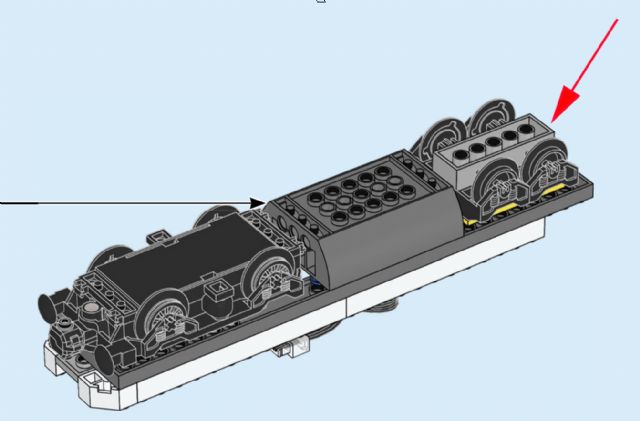
a brick versus a plate for the underside of the bogies?
I thought maybe there was a switch piece that the brick is supposed to hit, but
the fuel tank and the motor would hit that if there was one. Esthetically it
helps make it appear that both front and back are drive units (since you can't
see through the wheels) but they use this same design tactic on rail cars too.
Some things irrationally bug me when I can't think of an obvious reason for
a design. So for my train aficionados, is there a functional reason for using
a brick versus a plate for the underside of the bogies?
I thought maybe there was a switch piece that the brick is supposed to hit, but
the fuel tank and the motor would hit that if there was one. Esthetically it
helps make it appear that both front and back are drive units (since you can't
see through the wheels) but they use this same design tactic on rail cars too.
Some things irrationally bug me when I can't think of an obvious reason for
a design. So for my train aficionados, is there a functional reason for using
a brick versus a plate for the underside of the bogies?
I thought maybe there was a switch piece that the brick is supposed to hit, but
the fuel tank and the motor would hit that if there was one. Esthetically it
helps make it appear that both front and back are drive units (since you can't
see through the wheels) but they use this same design tactic on rail cars too.
I have a feeling and it might be a silly one. I'd almost be willing to bet
it was. The bin when they made the design; a 2x6 brick was closer to the builder
than the plates.
or
LEGO has Extra Bricks in the warehouse when they go to manufacture the set. Use
the leftovers. (filler leftovers) Several Sets have these considerations
Some things irrationally bug me when I can't think of an obvious reason for
a design. So for my train aficionados, is there a functional reason for using
a brick versus a plate for the underside of the bogies?
I thought maybe there was a switch piece that the brick is supposed to hit, but
the fuel tank and the motor would hit that if there was one. Esthetically it
helps make it appear that both front and back are drive units (since you can't
see through the wheels) but they use this same design tactic on rail cars too.
I have a feeling and it might be a silly one. I'd almost be willing to bet
it was. The bin when they made the design; a 2x6 brick was closer to the builder
than the plates.
or
LEGO has Extra Bricks in the warehouse when they go to manufacture the set. Use
the leftovers. (filler leftovers) Several Sets have these considerations
W
HA! I welcome all theories, I just didn't know if there was a functional
reason. I think every train is like this.


 USA, Ohio




 France, Nouvelle-Aquitaine